Quiet Anchors: How Crystal Companions Can Deepen Your Meditation Moments
Meditation often arrives in conversation the way a distant mountain does, beautiful, admirable, and just slightly out of reach. Many of us assume it requires silence we don’t have, posture we can’t sustain, or time we can’t spare. But meditation, at its most human scale, is simply the practice of paying attention. To the breath, tension, and the moment we are already standing inside.
You don’t have to “be good at it.” You only have to begin.
And sometimes, having something small and physical to hold, like a stone shaped by the slow patience of the earth, makes that beginning feel possible.
Meditation as a Return, Not an Achievement
It helps to gently set aside the idea that meditation is about clearing the mind. Minds are not whiteboards. They are weather systems.
Instead, meditation is more like stepping onto a porch and watching the weather move through.
A useful place to start is this simple rhythm:
- Sit comfortably
- Notice your breathing
- Let your attention rest there for a few moments
- When your thoughts wander (and they will), return again
That returning is the practice.
You’re not failing when you drift. You’re strengthening awareness each time you come back.
Why Crystals Can Support Stillness
Humans have always used physical anchors for contemplation: prayer beads, river stones, folded fabric, and candlelight. These objects don’t “do” meditation for us. Instead, they help signal to the nervous system:
This moment is different.
Crystals are particularly effective meditation companions because they invite both touch and attention. Their weight, texture, and temperature create a small sensory doorway into presence.
And presence is where meditation begins.
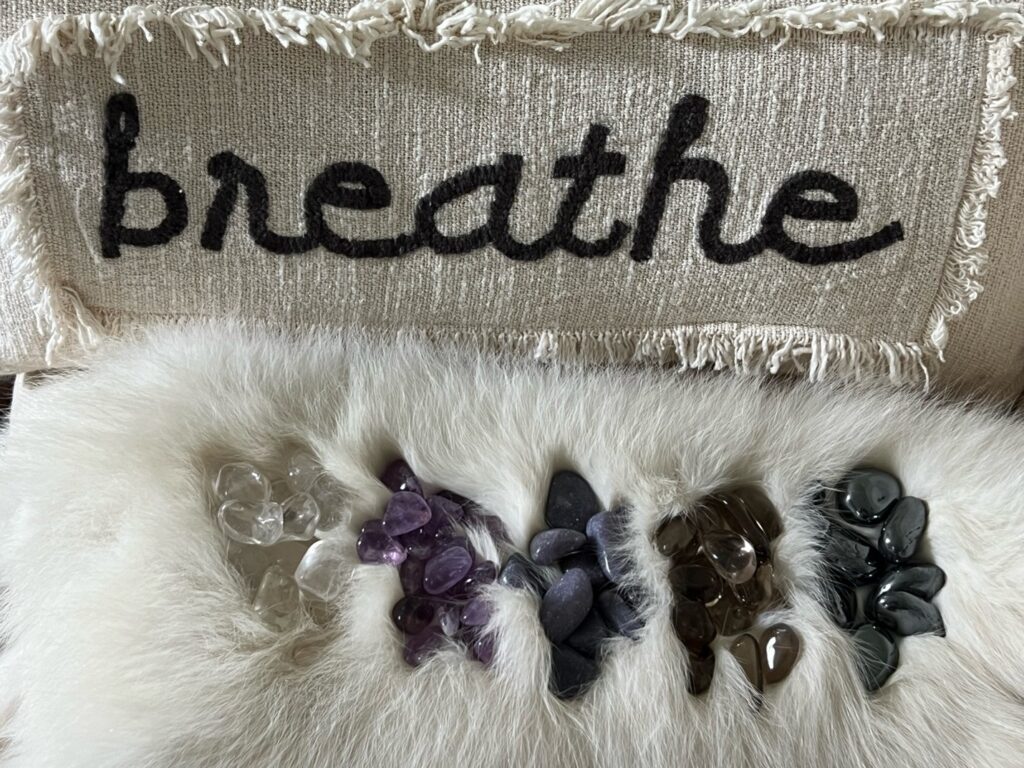
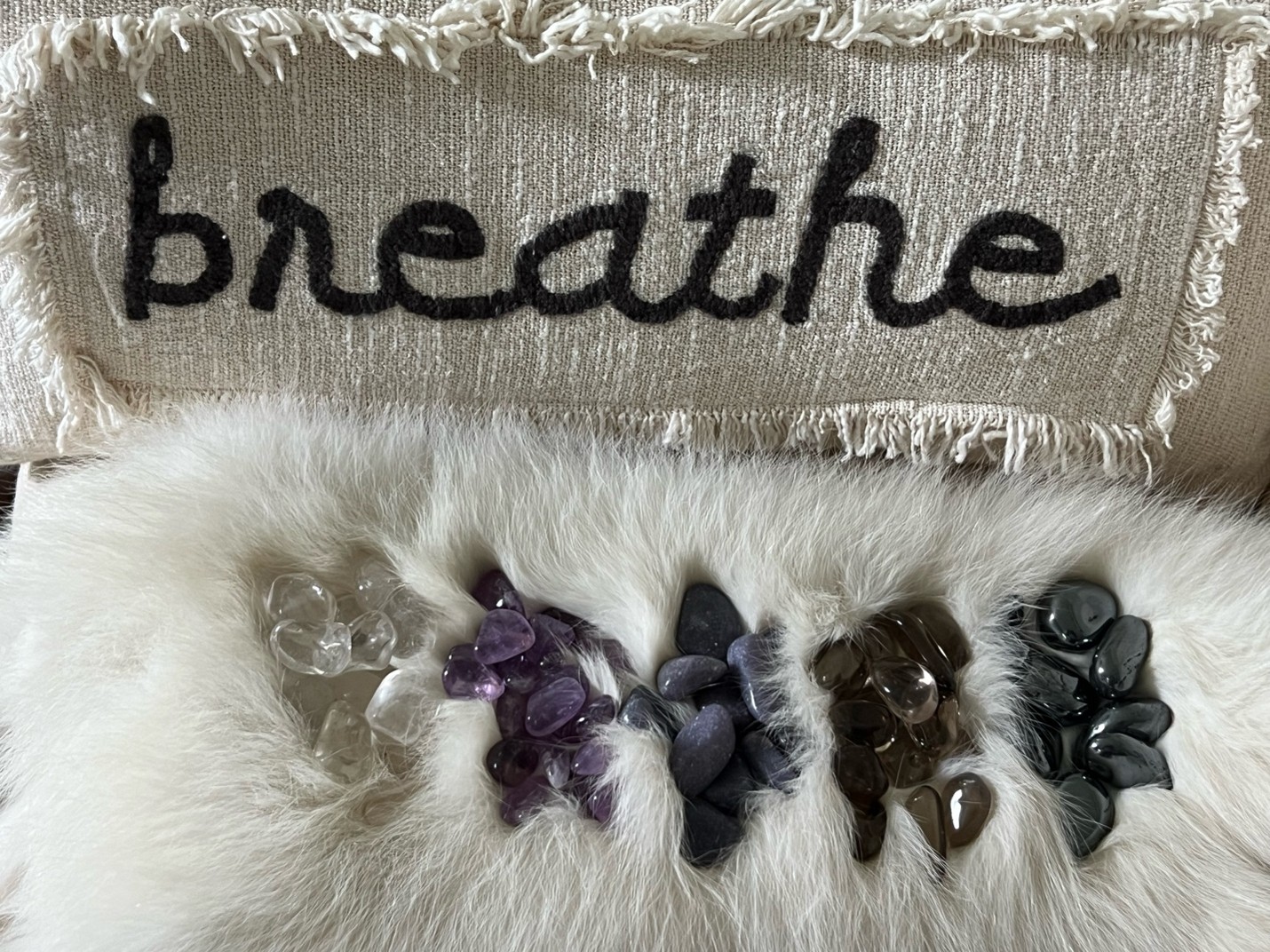
A Few Gentle Crystal Companions for Meditation
You don’t need a collection. One stone is more than enough. Choose something that feels quietly inviting rather than impressive.
Clear Quartz
Often described as a stone of clarity, clear quartz mirrors the intention of meditation itself: seeing what’s already there. Geologically, it’s one of the most abundant minerals on Earth, a reminder that clarity doesn’t belong to specialists.
Amethyst
Amethyst’s soft violet tone has long been associated with reflection and calm attention. Whether or not you connect with symbolism, its color alone can feel like dusk settling gently into the mind.
Lepidolite
With its layered, almost papery texture, lepidolite is often chosen during periods of transition or emotional change, when meditation feels less like quiet and more like steady companionship.
Sometimes the right meditation stone is simply the one that feels reassuring in your palm.
A Five-Minute Meditation You Can Try Today
Meditation becomes sustainable when it becomes small.
Here’s a practice that fits easily into a morning routine, a lunch break, or the quiet edge of evening.
Step 1: Choose a place
A chair, a corner of the bed, the front seat of your parked car, or anywhere you can sit without interruption for a few minutes.
Step 2: Hold or place your crystal nearby
Let it act as a gentle signal that this moment belongs to you.
Step 3: Notice your breath
Not deeper than usual. Not slower than usual. Just noticeable.
Step 4: Count five breaths
Inhale (one), exhale (one).
Inhale (two), exhale (two).
Continue until five.
Step 5: Stop counting
Now breathe and sit for another minute.
That’s enough.
Meditation doesn’t become meaningful because it’s long. It becomes meaningful because it’s repeated.
When Meditation Feels Restless Instead of Peaceful
Many people quietly assume they’re “doing it wrong” when meditation feels busy or emotional. In reality, this is often the first sign that awareness is deepening.
Stillness doesn’t remove thoughts.
It reveals them.
If meditation feels uncomfortable some days, try adjusting the approach:
- Keep your eyes slightly open
- Hold a grounding stone like smoky quartz or hematite
- Shorten the session instead of skipping it entirely
- Let movement be part of the practice
Meditation adapts to your life. It isn’t meant to compete with it.
The Quiet Work Meditation Actually Does
Meditation rarely announces its progress. Instead, you begin to notice it in small, unexpected ways:
- Pausing before reacting
- Noticing tension earlier
- Breathing before answering
- Listening more fully
Sometimes the change is simply this: it becomes easier to stay present in the moment.
A small crystal beside your seat doesn’t create that transformation. But it can remind you to return to the moment where it becomes possible.
And meditation is the simple act of returning your attention to the present again and again.
©2026 Musings by Judy Gallauresi